

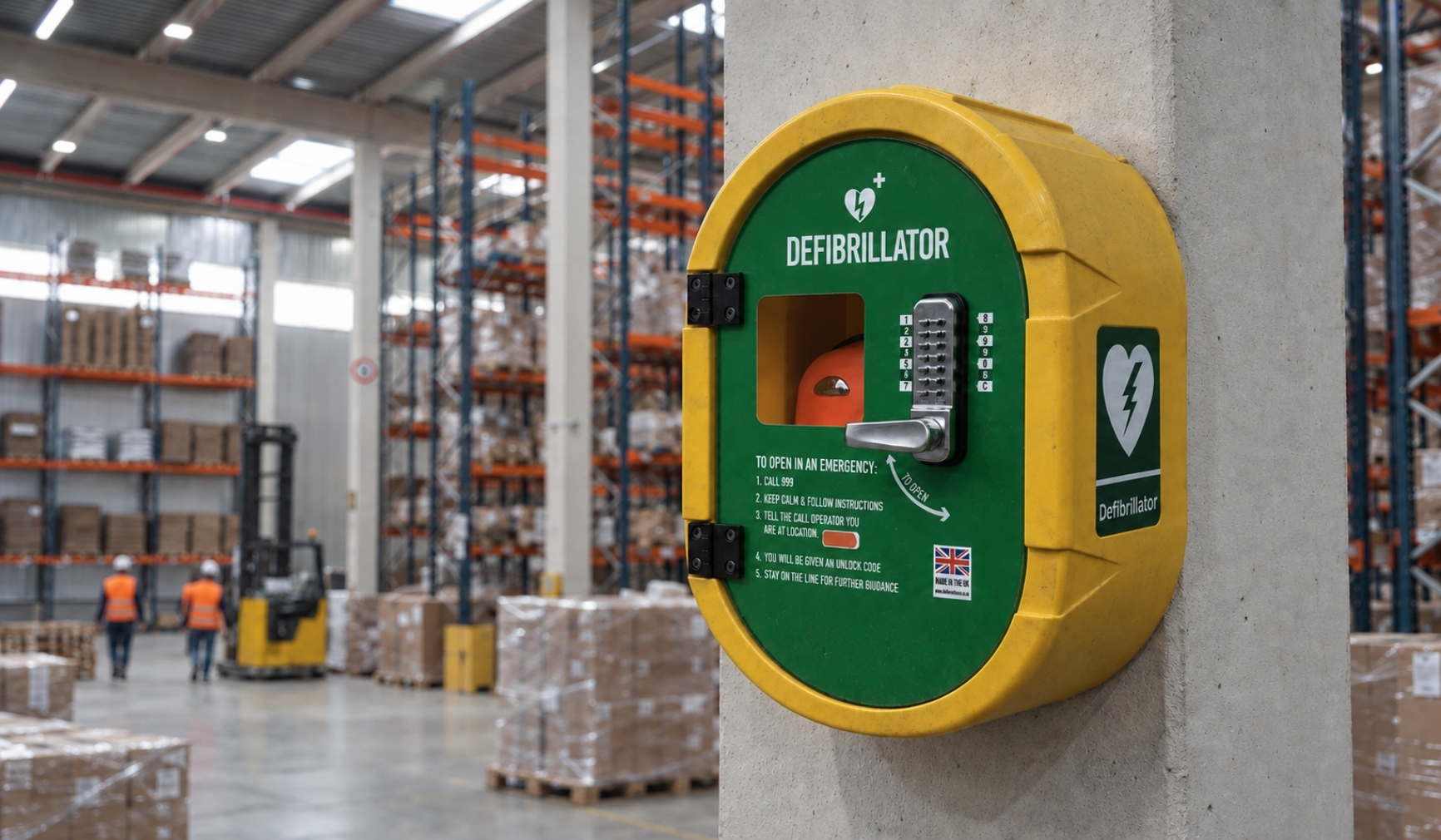
Defibrillators in warehouses and vehicle fleets need a different placement strategy to a typical office.
Large sites, shift-based teams and vehicles that move independently of any fixed base all change how coverage should be planned. A single, wall-mounted defibrillator by the front door may not provide adequate coverage for this kind of operation, depending on site size and layout. So getting workplace defibrillator placement right means thinking strategically.
Why Do Logistics and Distribution Sites Need Their Own Defibrillator Strategy?
Warehousing and transport carry risk factors that generic workplace guidance doesn’t fully cover. You’ll likely have large floor areas, workers spread across day and night shifts and vehicles operating miles from any fixed site.
Dispersed Sites Push Response Times Past the Danger Point
Every minute without CPR and defibrillation reduces a person’s chance of survival by around 10%, according to Resuscitation Council UK. In a large distribution centre, that minute can disappear just walking from one end of the building to the other.
A defibrillator at reception might satisfy a first aid needs assessment on paper, but if it takes four minutes to reach from the far side of a 500,000 sq ft warehouse, it isn’t providing any meaningful defibrillator coverage for large sites. Thanks to the British Heart Foundation, we know that fewer than 1 in 12 people currently survive an out-of-hospital cardiac arrest in England. Proximity to a defibrillator is one of the few factors that meaningfully changes that number, so defibrillator coverage for large sites needs to take this into account.
Lone Workers and Round-the-Clock Shifts Raise the Stakes
Night shifts, weekend cover and lone working in remote parts of a site all reduce the number of people around to notice a collapse, start CPR, and fetch help. HSE guidance on lone working classes delivery drivers and warehouse staff working without direct supervision as lone workers with their own risk profiles.
A defibrillator for the workplace only helps if it’s within reach at 3am on a night shift, as well as during office hours when management and visitors are on site.
Workplace Defibrillator Placement: Where to Put Devices Across a Large Site
Getting workplace defibrillator placement right on a large site doesn’t have to be difficult, but it does take a methodical approach.
Mapping Defibrillator Coverage for Large Sites
Treat the building like a map rather than a single location.
Walk the site and time the routes between likely collapse points and each proposed cabinet.
A useful planning principle is to aim for a round trip of around three minutes or less wherever possible; this reflects the wider evidence that early defibrillation within three to five minutes gives by far the best chance of survival.
Spaces like mezzanines, goods-in bays, picking aisles, loading docks and welfare areas often need their own dedicated cabinet rather than sharing coverage with the main entrance. Multi-building sites are best treated as several smaller sites stitched together, each with its own coverage plan, rather than one device covering the whole footprint.
You can read this blog to find out why the proximity question matters so much in practice.
Choosing Cabinets Rated for Warehouse Conditions
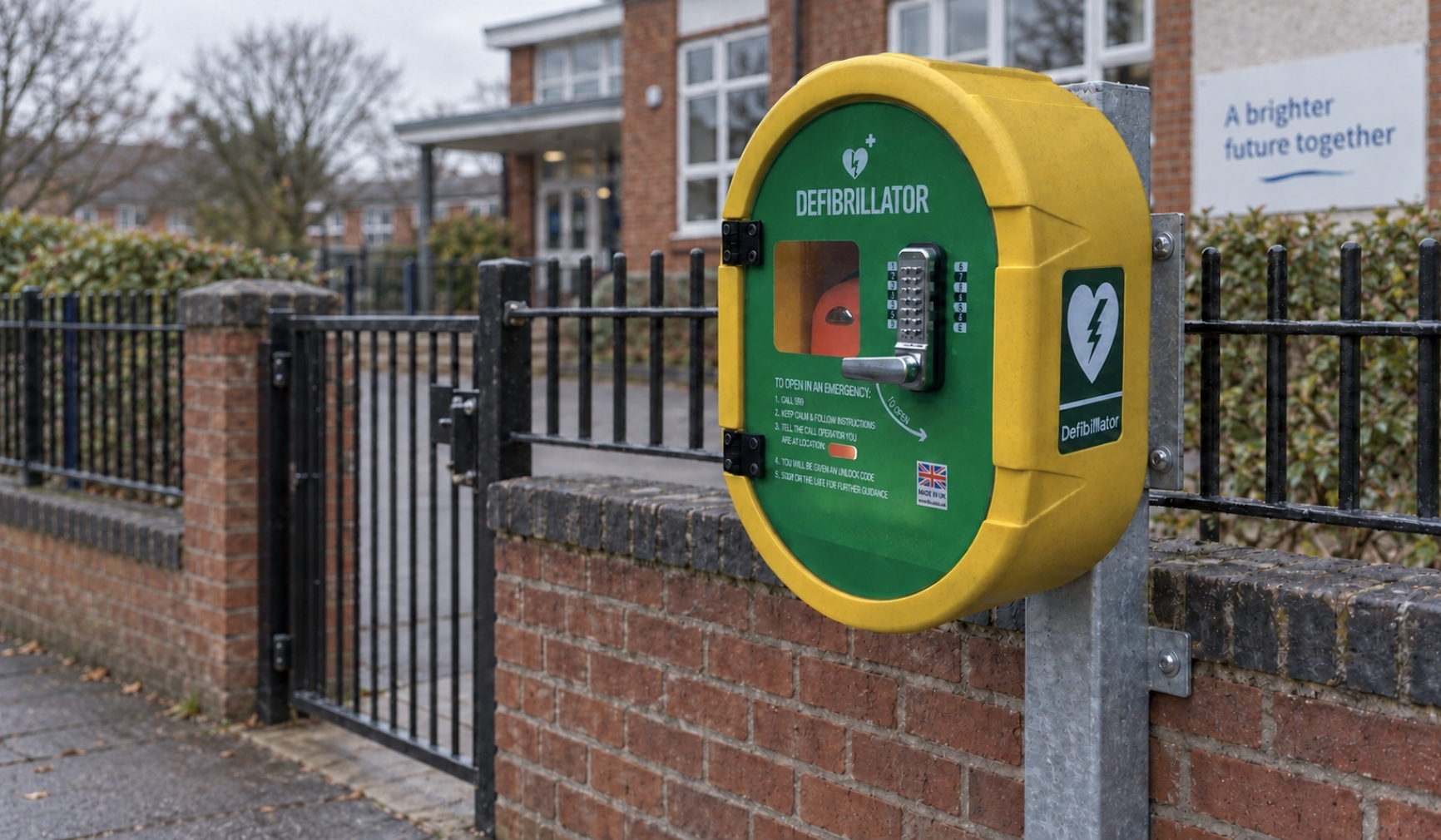
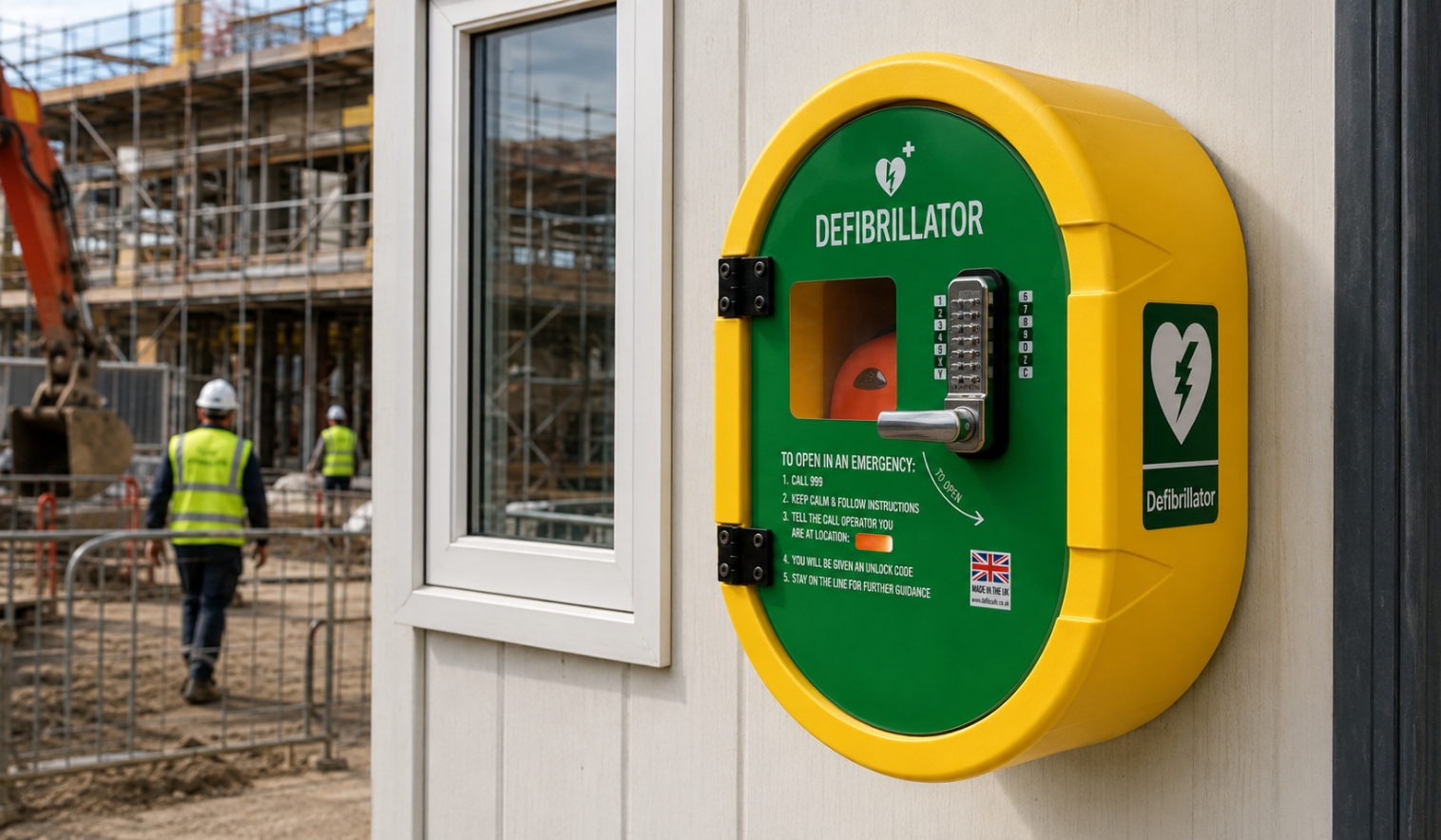
Warehouse environments are dusty, sometimes unheated and exposed to forklift traffic and general wear. Look for a defibrillator cabinet rated at least IP65 or IP66, the two ratings that indicate protection against dust and low-pressure water jets; a standard indoor case isn’t designed to cope with the dust, knocks and exposure typical of a loading bay.
A configurable PIN-code lock also suits a large shift-based workforce far better than a physical key that can be lost or duplicated. Cold storage and refrigerated distribution centres bring an added consideration: some cabinets are available with heating elements, which can help protect the AED against low temperatures.
A heater alone shouldn’t be relied on to keep the device within its full operating range in extreme cold, so it’s worth checking this against the manufacturer’s specification for the site.

Is Your Workplace Defibrillator Placement Ready to Save Lives?
Most operations haven’t mapped this properly. Coverage needs a site walk, an honest look at shift patterns, and cabinets built for warehouse and vehicle conditions.
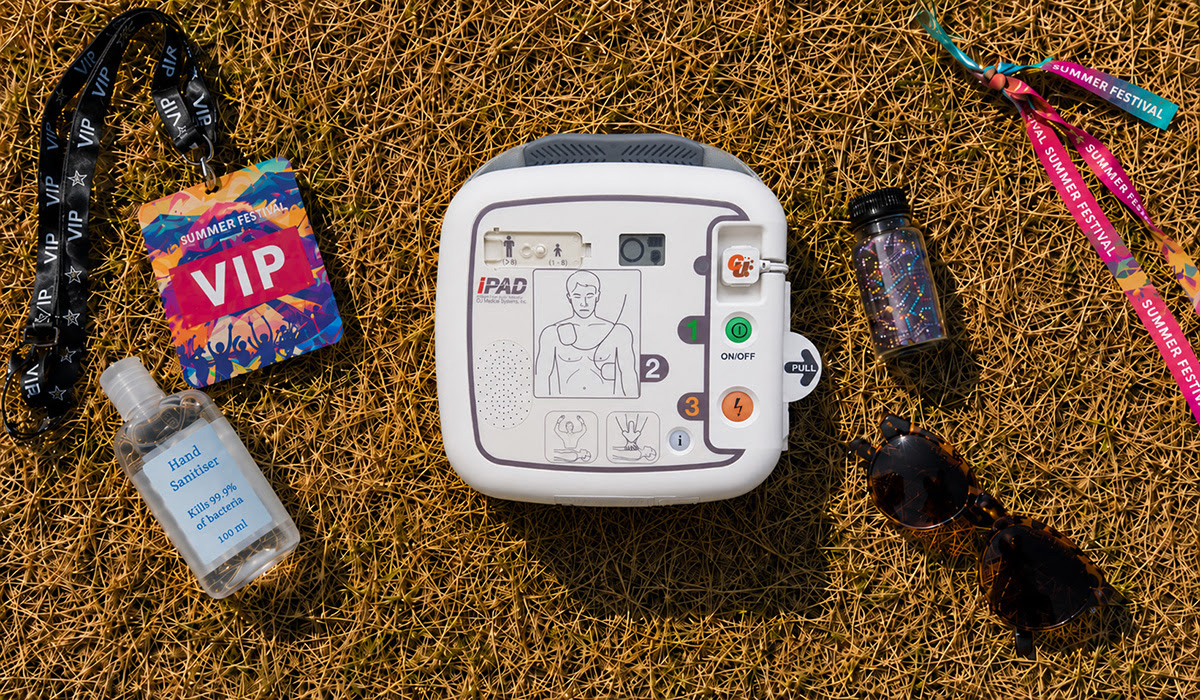
WEL Medical can help. We supply the iPAD defibrillator range and our own IP66-rated DefibSafe cabinets to keep your site safe. Get in touch today to find out more.
Defibrillators for Vehicle Fleets Present a Different Kind of Coverage Problem
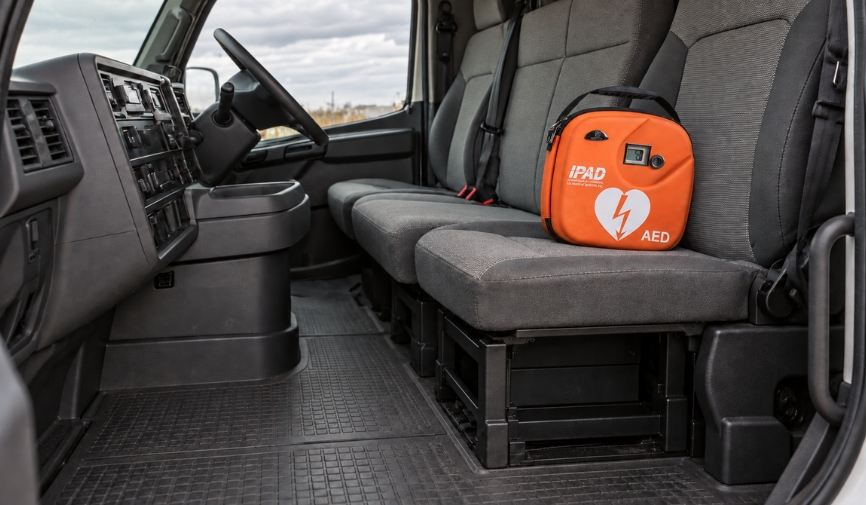
Every vehicle on the road is effectively its own small site, moving further from any fixed defibrillator location by the minute. It’s important to think about how your defibrillator strategy can accommodate this work pattern.
Why Cab Temperature Extremes Matter for Device Storage
Cab temperatures can swing significantly, from below freezing on a winter morning to well above what a static indoor unit would ever experience in direct summer sun.
Any device stored in a vehicle needs to stay within its manufacturer-confirmed temperature range. WEL Medical’s SP1, for example, has a ready-for-use/standby storage range of 0°C to 43°C. It’s worth having a routine for checking the device hasn’t quietly drifted outside that range during a heatwave or cold snap.
Battery and pad expiry dates should also be checked more frequently than for a static indoor unit, given the wider temperature swings a vehicle-based device is exposed to. You can find out more about how rising temperatures affect people and safety equipment on site by clicking here.
Building Defibrillator Access Into Route and Depot Planning
For larger fleets, equipping every single vehicle can be a massive financial and practical challenge. Usually, a more workable approach is to identify which routes and vehicle types carry the highest risk – this might be long solo runs or remote drop-off points – and prioritise those first.
Depots and driver rest stops should also sit within the wider coverage map, since drivers spend time there too, not just behind the wheel. Every defibrillator, whether static or vehicle-based, should be registered on The Circuit so that ambulance call handlers can direct a bystander straight to it.
Organisations managing five or more devices across multiple sites can register under a single multi-guardian account rather than setting one up per location.
Ready to Put the Right Defibrillator in the Right Place?
Every site is different, and the fastest way to close a coverage gap is to talk it through with people who know defibrillators and defibrillator cabinets inside out.
WEL Medical supplies the iPAD defibrillator range alongside our own DefibSafe cabinets, built to an IP66 rating and designed for exactly the kind of warehouse, depot, and fleet conditions covered above.
Whether you need a single cabinet for one distribution hub or a fully mapped plan across multiple sites and vehicles, we can help you work out what’s needed and where it should go. Get in touch today to find out more.
FAQs
Do warehouses legally need a defibrillator?
UK employers aren’t legally required to install a defibrillator, but HSE guidance expects every workplace to carry out a first-aid needs assessment. Depending on the workplace and its risk profile, that assessment may lead an employer to consider an AED, though HSE doesn’t specifically require a cardiac arrest risk assessment. Large or remote sites often conclude they need one as a result.
How many defibrillators does a large distribution centre need?
There’s no fixed number, and this isn’t a formal requirement. As a general planning principle, aim for coverage that lets anyone reach a defibrillator within roughly a three-minute round trip. Bigger buildings, mezzanines and separate blocks will usually need more than one device to achieve this.
Can defibrillators be kept in vehicles or lorry cabs?
Yes, but check the manufacturer’s stated temperature range first, and have a routine for confirming the device stays within it, particularly during heatwaves or cold snaps.
Who can use a defibrillator during a warehouse emergency?
Anyone. Defibrillators are built for untrained bystanders: the device analyses the casualty’s heart rhythm and will only advise or deliver a shock where this is appropriate, so any employee can respond immediately while waiting for a trained first aider or ambulance.





Leave A Comment