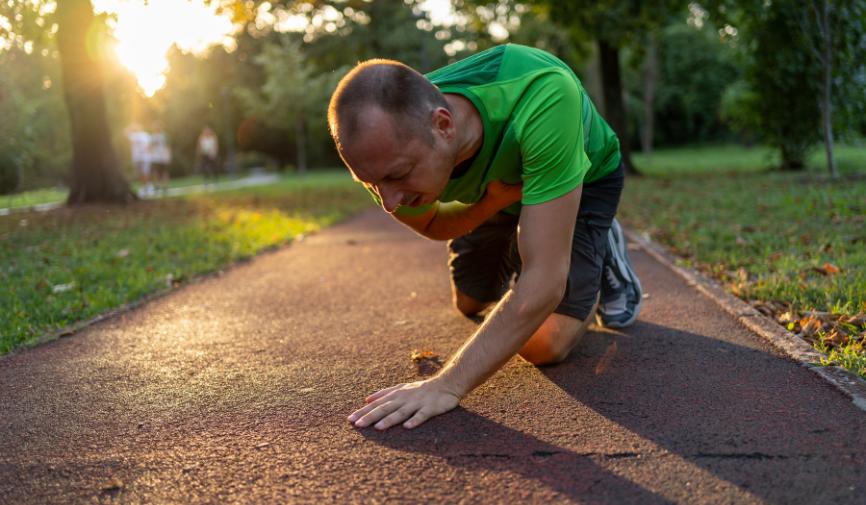
Think about the last public event you attended. It might have been a park fun run, a town centre market, or a leisure centre open day.
Now imagine if someone had collapsed in cardiac arrest.
How long would it take to reach them with a defibrillator? Not how long until the ambulance arrived. How long until someone on the ground could deliver a shock?
For councils and community groups, knowing how to plan emergency cardiac response in community settings is absolutely crucial. AED response time in public spaces determines whether someone lives or dies. And the honest answer, for many sites across the UK, is that response time is too slow.
According to the Resuscitation Council UK, a public access defibrillator is used in fewer than one in ten out-of-hospital cardiac arrests, despite AEDs being simple enough for anyone to operate. Thinking critically about AED placement makes your defibrillators more accessible in cardiac emergencies, which is a powerful way to close the response time gap.
Why AED Response Time in Public Spaces Is a Life-or-Death Variable
For every minute a person is in cardiac arrest without CPR and defibrillation, their chance of survival drops by 10%.
The target ambulance response time for Category 1 calls, which cover cardiac arrest specifically, is 7 minutes. Meeting that target consistently remains a challenge across most services, with some parts of the country taking up to 12 minutes.
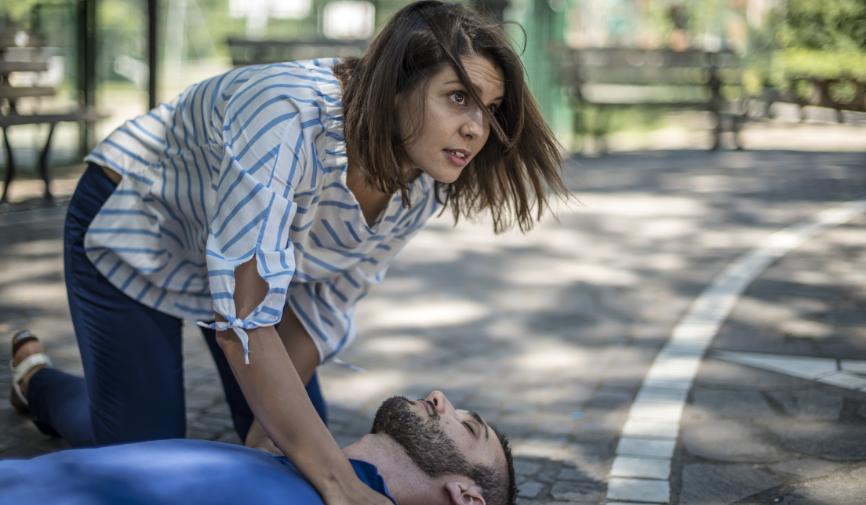
That leaves a window in which a community-placed AED and a bystander willing to act can be the difference between life and death.
Understanding Emergency Response Gaps In Parks And Town Centres
The geography problem
Large public spaces have a problem that buildings don’t, namely, spread.
Think about a 12-hectare park, a busy high street, or a sports complex with multiple pitches. In these environments, a cardiac arrest can happen far from any fixed resource. If a single AED sits at the park entrance, it could be a four- or five-minute walk from the furthest point.
By the time someone realises what is happening, retrieves the device, and gets back, the window for effective defibrillation may have already closed.
The general planning principle is that an AED should be reachable within three minutes from anywhere on site.
In a compact indoor venue, one defibrillator can usually achieve this. In open outdoor environments, it almost never will.
The visibility problem
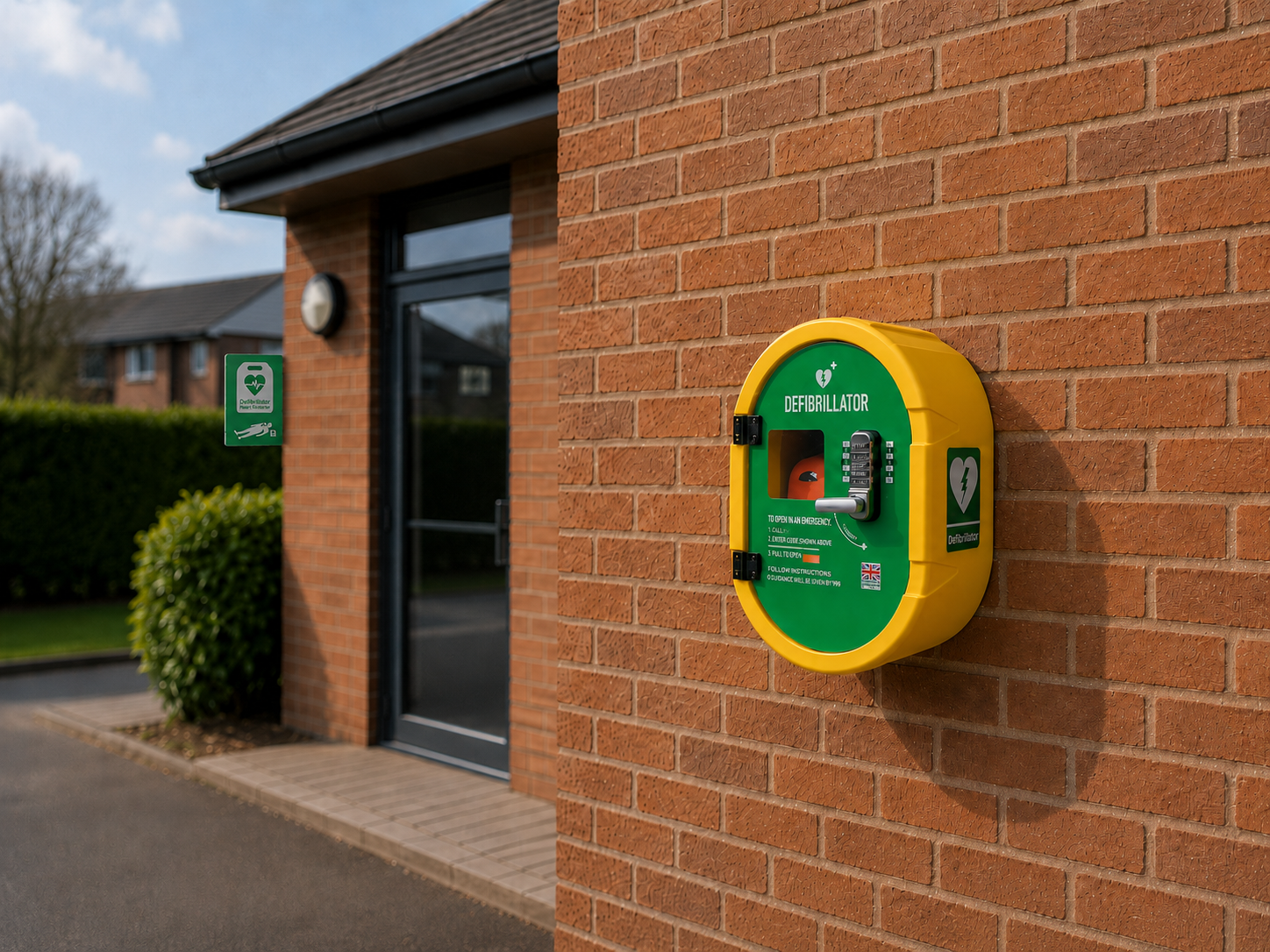
Even a well-placed AED only helps if someone can find it fast.
When a 999 call is made, the handler can direct the caller to the nearest registered device via The Circuit, the UK’s national defibrillator network. That is a powerful, underused tool. But it only works if the device is registered and only if the cabinet is prominent enough for a panicked bystander to locate it under pressure.
Ready to Review Your Site’s Cardiac Response Capability?
Ready to review your site’s cardiac response capability?
Walk your site and ask one question: could someone reach an AED from the furthest point within three minutes?
If the answer is no, or you’re not sure, there may be a gap.
Get in touch with the WEL Medical team to discuss your setup and the options available.
How to Plan Emergency Cardiac Response in Community Settings
Start with a site assessment
Before choosing any equipment, walk through each area and ask:
- What is the furthest walking distance from any point on the site to where an AED might be placed?
- Are there zones with higher footfall, more physical activity, or an older or more vulnerable user base?
- Is there 24/7 public access, or does the site close at night?
- Are there power sources for a heated, illuminated cabinet?
- What is the vandalism risk, and does that affect which cabinet you choose?
How far apart should public AEDs be placed?
The benchmark is that no point on a site should be more than a 90-second walk from an AED. That allows 90 seconds to retrieve the device and 90 seconds to get back, which keeps the total response time within three minutes.
On flat, open ground, this works out to roughly a 100-150 metre radius per device. On uneven terrain, across multiple buildings, or where access routes are indirect, that radius shrinks.
For larger sites, the right approach is to map coverage zones and place defibrillators where the gaps are, not just at the most convenient spots like entrance gates or staffed receptions.
Remember, cardiac arrests do not always happen near to the person who will respond first. Planning a layout with multiple devices as part of a cardiac emergency response strategy improves the odds that whoever acts quickly can reach an AED.
Choosing the right equipment for outdoor public deployment
Not all defibrillators are suited to outdoor, public-facing environments. Key features to look for in community defibrillator schemes include:
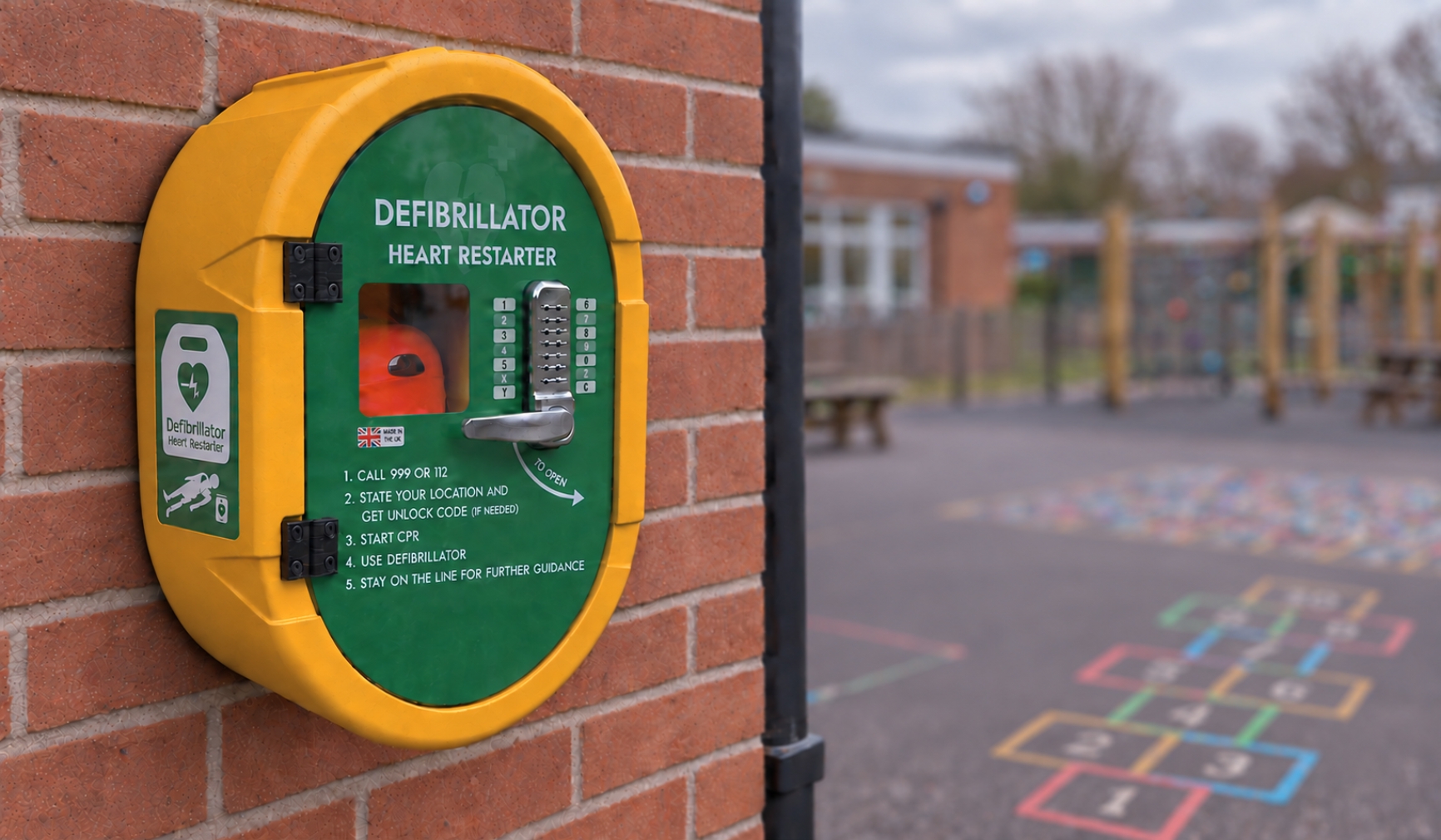
- IP rating. An IP66-rated AED is fully protected against dust and powerful water jets, making it suitable for exposed outdoor locations. The same standard applies to the cabinet. Our DefibSafe 2 cabinet carries an IP66 rating, with a watertight seal and UV-resistant casing built for year-round outdoor use.
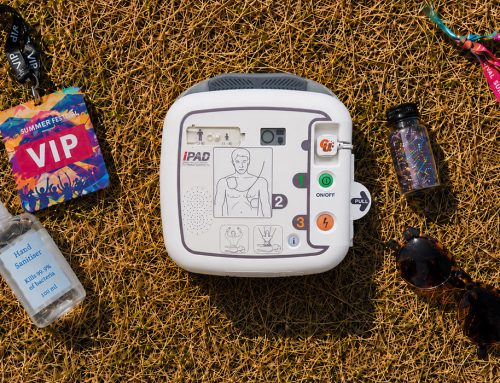
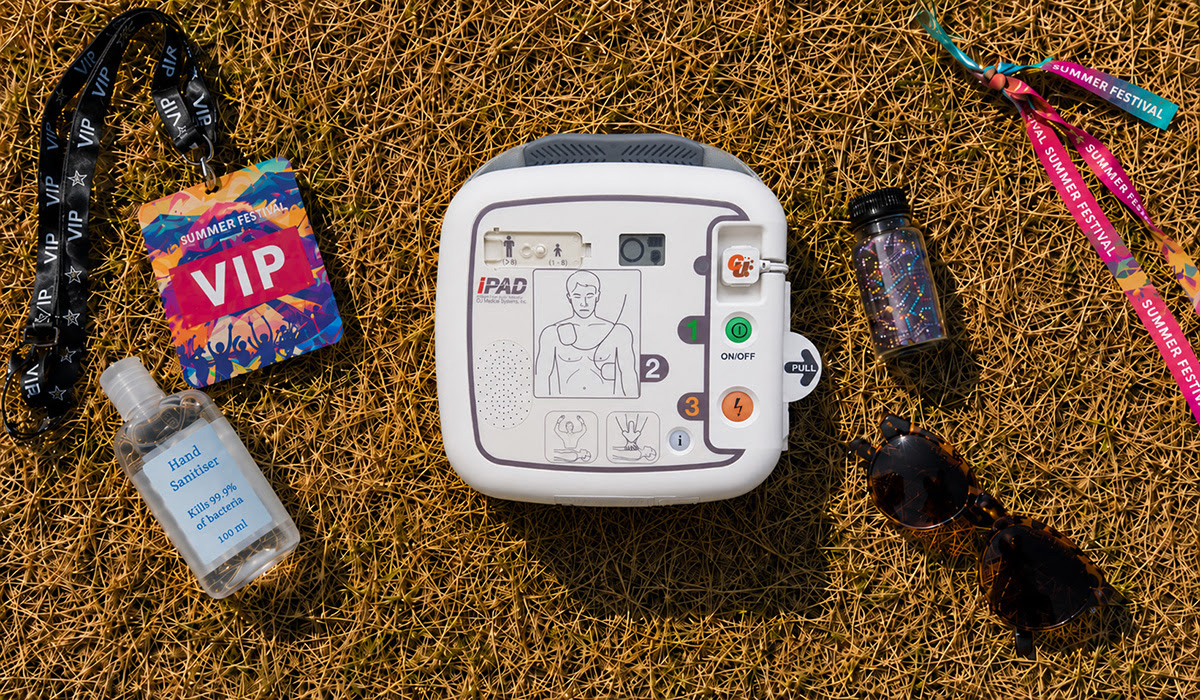
- Paediatric capability without pad-swapping. In community settings, the person in cardiac arrest could be a child. The iPAD SPR switches between adult and paediatric mode at the press of a button, with no pad change needed. That removes a source of delay and confusion when seconds are critical.
- Self-testing. Devices that run their own daily, weekly, and monthly diagnostics reduce the burden on site guardians and mean the AED is ready when it is needed.
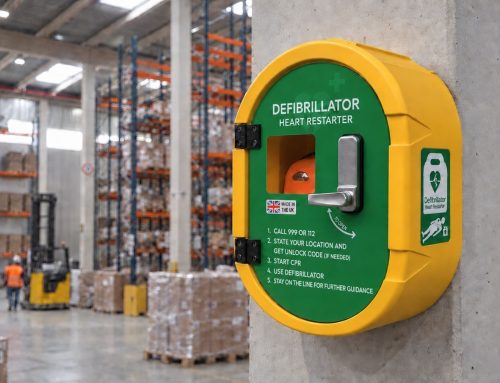
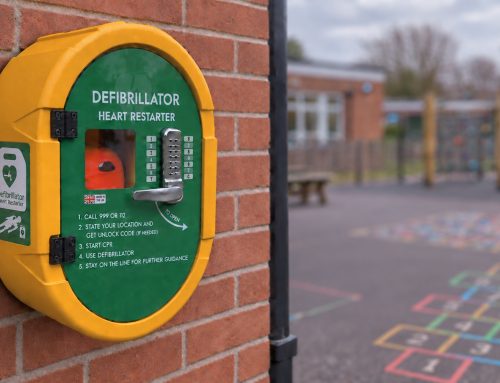
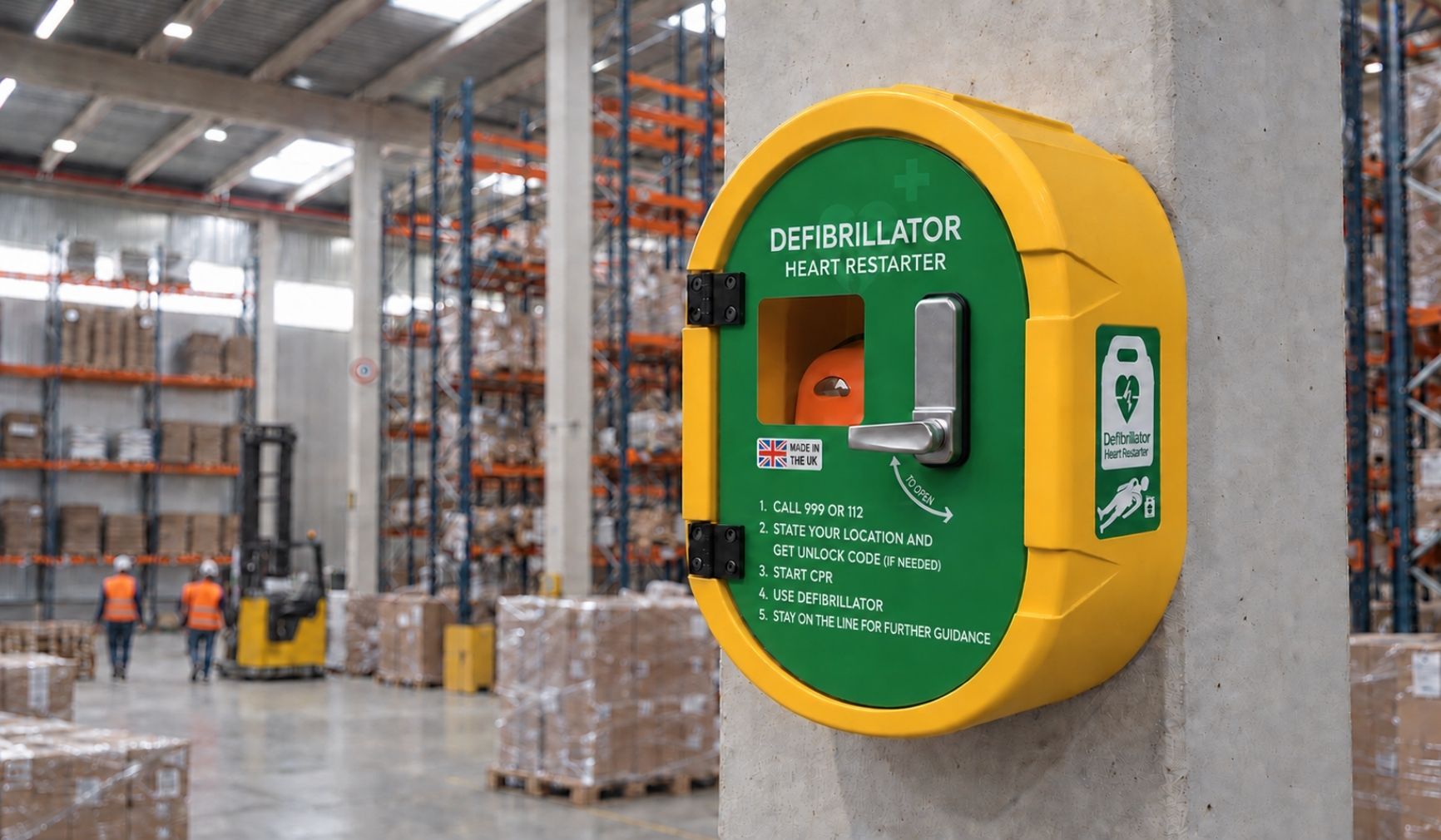
- Cabinet security. The right cabinet balances security with access. A PIN-code lock shared with the local ambulance service means 999 handlers can relay the code to a caller in real time.
Want to Prepare Your Community to Manage Sudden Cardiac Arrest?
If you’re responsible for a public space, the most useful next step is a site assessment.
Walk the ground, map the coverage gaps, and work out exactly how many devices you need and where they should go.
The WEL Medical team works with councils, community groups, leisure operators, and voluntary organisations across the UK to do exactly that.
Get in touch to discuss your site and whether your current AED provision is fit for purpose.
We work with councils, community groups, leisure operators and voluntary organisations across the UK to support practical, well-specified and accessible defibrillator setups.
FAQs
Does a public space legally have to have a defibrillator?
No single UK law makes AEDs mandatory in all public spaces, but the absence of a legal obligation doesn’t remove the duty of care. The Resuscitation Council UK and British Heart Foundation recommend that any venue with regular footfall consider public access defibrillation.
How far apart should public AEDs be placed in community settings?
The benchmark is a 90-second walking distance from any point on-site, roughly a 100-150 metre radius per device on open ground. Larger or multi-zone sites will need multiple devices. A site-specific assessment gives the most reliable answer.
Can a member of the public use a defibrillator without training?
Yes. AEDs guide users through every step with clear voice prompts. The device assesses heart rhythm automatically and only delivers a shock when needed. No training is required. The most important thing is to act quickly.