
World Health Day is all about the importance of improving global health and saving lives through better awareness and action. Few emergencies demonstrate this as clearly as a cardiac arrest. Knowing what to do during a cardiac arrest is, in this context, absolutely crucial.
Cardiac arrest can happen anywhere: in the workplace, at a sports venue, in a shopping centre, or at home. When it happens, the first few minutes are absolutely critical, and survival often depends on the people nearby before paramedics arrive.
A clear understanding of cardiac arrest first aid and recognising the signs makes all the difference.
What Happens During Sudden Cardiac Arrest?
Sudden cardiac arrest happens when the heart suddenly stops pumping blood around the body effectively. Usually, this happens because the heart’s electrical system malfunctions.
Instead of beating normally, the heart might enter a dangerous rhythm like ventricular fibrillation, where it just quivers instead of pumping blood.
When this happens:
- Blood stops circulating
- Oxygen stops reaching the brain
- The person collapses and loses consciousness
- Within seconds, breathing may stop and become irregular.
Without treatment, brain damage can begin in as little as four minutes, which is why immediate cardiac arrest first aid is so important.
Recognising the Signs of Cardiac Arrest
Knowing how to recognise a cardiac arrest quickly and accurately is the crucial first step in delivering an effective sudden cardiac arrest response.
The most common signs include:
- Sudden collapse
- Unresponsiveness
- No normal breathing
- Occasional gasping sounds
Sometimes cardiac arrest is confused with a heart attack, but the two are actually very different.
A heart attack is when blood flow to part of the heart is blocked. The person is usually conscious and experiencing symptoms like chest pain or discomfort.
Cardiac arrest, however, causes the heart to stop functioning altogether. The person becomes unconscious and needs immediate cardiac arrest first aid.
Why the Immediate Sudden Cardiac Arrest Response Matters
When someone experiences an out-of-hospital cardiac arrest, survival depends almost entirely on what happens in the first few minutes.
According to the Resuscitation Council UK (RCUK), every minute without CPR and defibrillation reduces the chance of survival by 7-10%. What’s more, in the UK, fewer than 1 in 12 people survive an out-of-hospital cardiac arrest, largely because life-saving treatment is not delivered quickly enough.
Early intervention changes that picture significantly.
When bystanders begin CPR immediately and a defibrillator is used within the first few minutes, survival rates increase by as much as 70%.
Emergency services play a crucial role, but even the fastest ambulance response times cannot replace those first critical minutes. The actions taken by people on the scene are often the deciding factor.
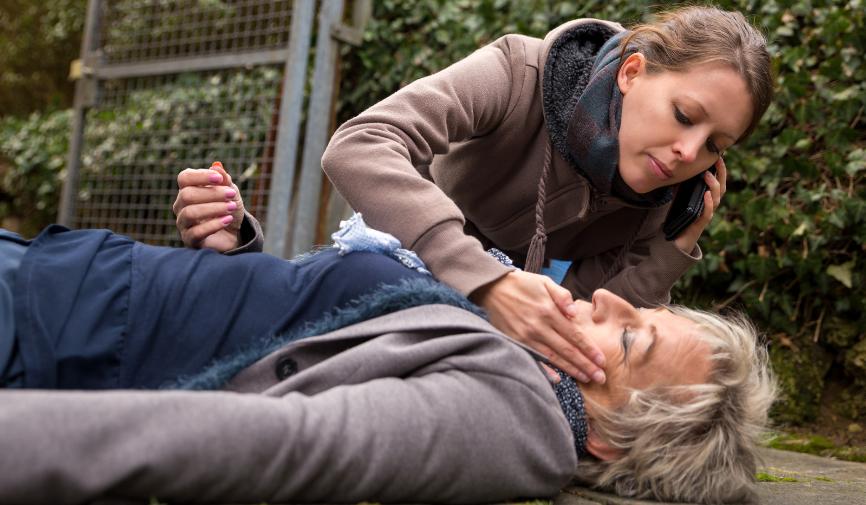
The Chain of Survival Explained
Medical professionals often refer to the chain of survival. They’re a series of steps that improve outcomes during cardiac arrest.
Early Recognition
The first step is recognising the emergency and calling the emergency services on 999. The call handler can guide you through the situation and provide instructions while help is on the way.
Immediate CPR
Cardiopulmonary resuscitation helps keep blood circulating to the brain and vital organs. Even basic chest compressions can maintain a small but crucial amount of oxygen flow until a defibrillator can be used.
Early Defibrillation
A defibrillator can restore a normal heart rhythm by delivering a controlled electric shock. For certain cardiac arrest rhythms, defibrillation is the only effective treatment.
Advanced Medical Care
Paramedics then continue treatment and transport the patient to hospital for further care. Each step in this chain supports the next, but the first three depend heavily on people nearby.
How Prepared is Your Workplace for a Cardiac Emergency?
Knowing what to do during a cardiac arrest is essential, but often real-world outcomes are defined before the emergency takes place.
Preparing at an organisational level plays a major role in whether early intervention is even possible.
In many workplaces and public environments, delays happen because the right equipment is not accessible. Current guidance from RCUK is clear: defibrillation should happen within 3-5 minutes of collapse.
That means it’s worth reviewing a few key areas:
- Is there an accessible defibrillator on site?
- Is it clearly visible and can it be accessed outside of working hours?
- Is the device registered on the national defibrillator network so emergency services can direct people to it?
- Do staff have a basic understanding of CPR and defibrillator use?
Looking for the Right Equipment for Cardiac Arrest First Aid?
Quick access to life-saving equipment makes a huge difference when a sudden cardiac arrest takes place.
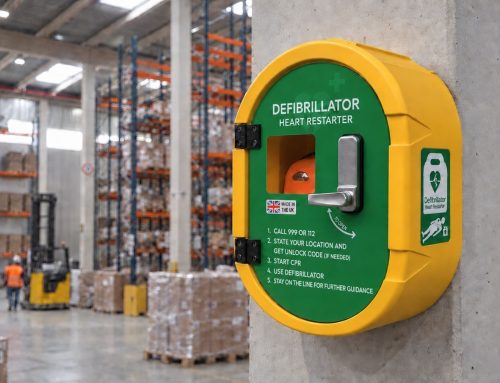
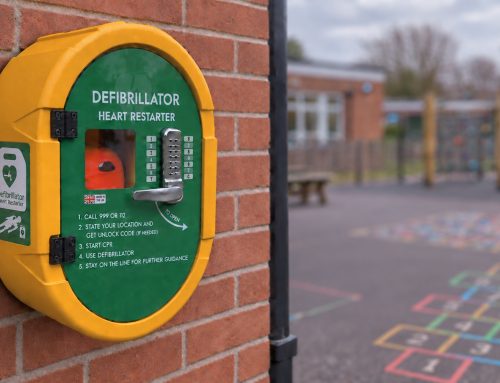
WEL Medical supplies a range of solutions, including iPAD automated external defibrillators and durable defibrillator cabinets to strengthen the chain of survival. Get in touch to find out more.
How Defibrillation Saves Lives
During many cardiac arrests, the heart enters a rhythm that cannot sustain life.
A defibrillator works by delivering an electrical shock that stops the chaotic rhythm, allowing the heart’s natural electrical system to restart.
This process is called defibrillation.
The earlier it happens, the greater the chance of survival. Public access defibrillators have become more common in recent years and can now be found in various locations, like:
- Offices and workplaces.
- Leisure centres.
- Schools and universities
- Shopping centres
- Pubs and restaurants
- Transport hubs
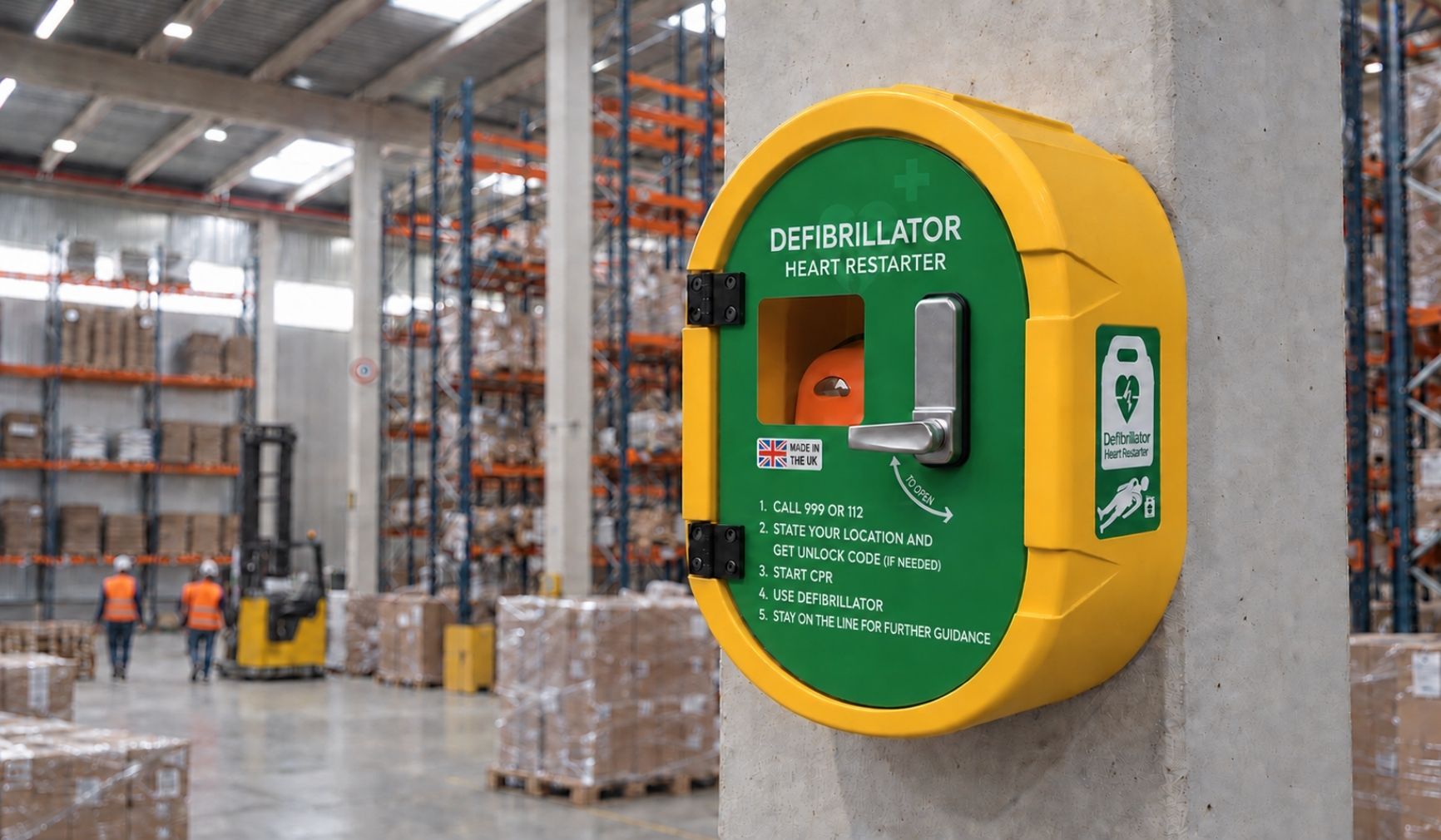
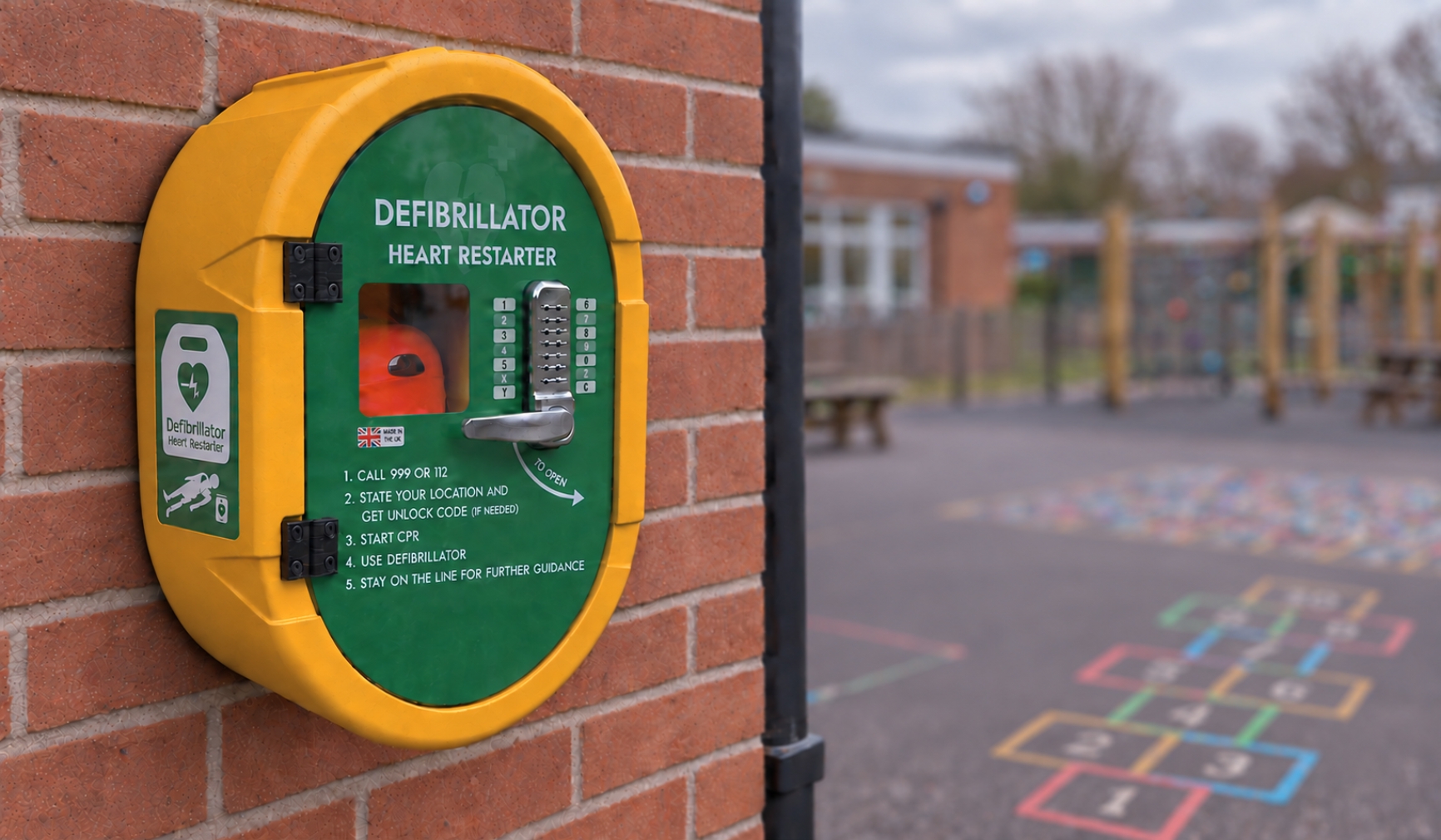
Often these are stored in secure outdoor cabinets so they can be accessed 24 hours a day. All of this shows that being able to reach and knowing how to use a defibrillator is fast becoming an essential life skill.
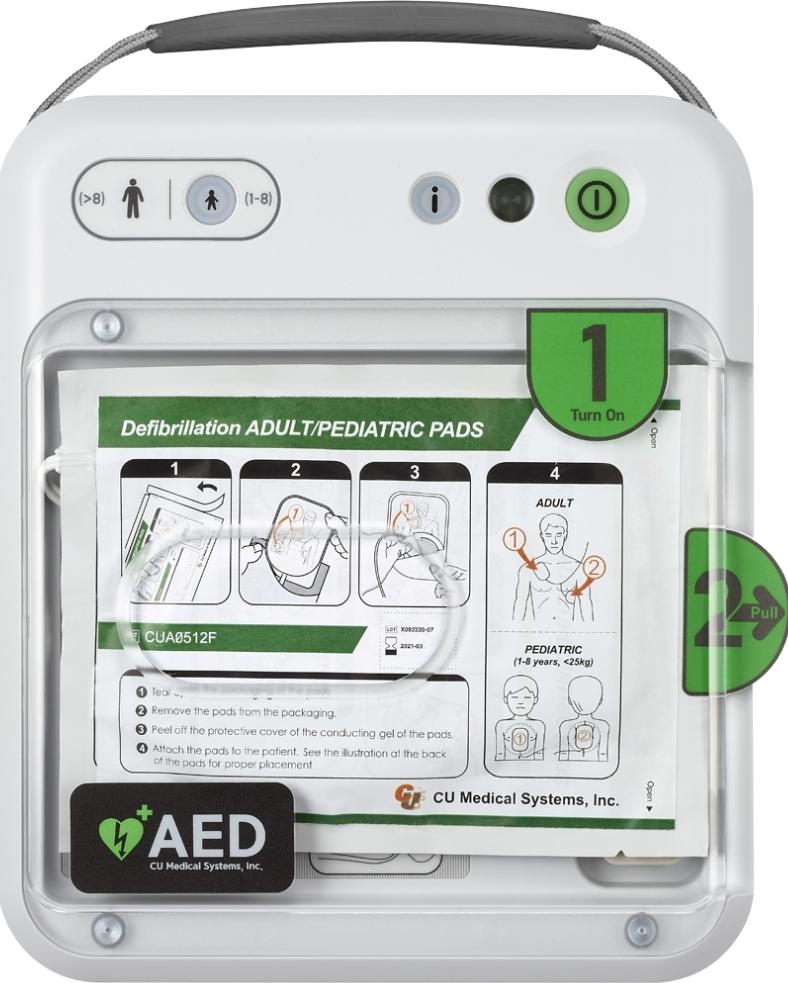
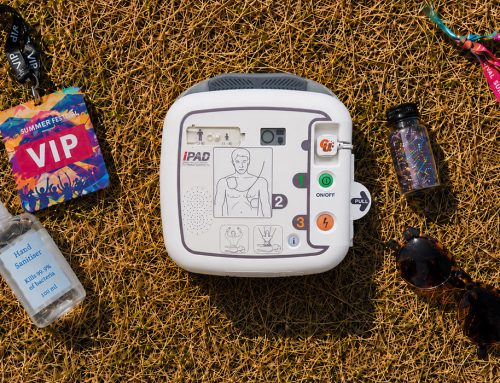
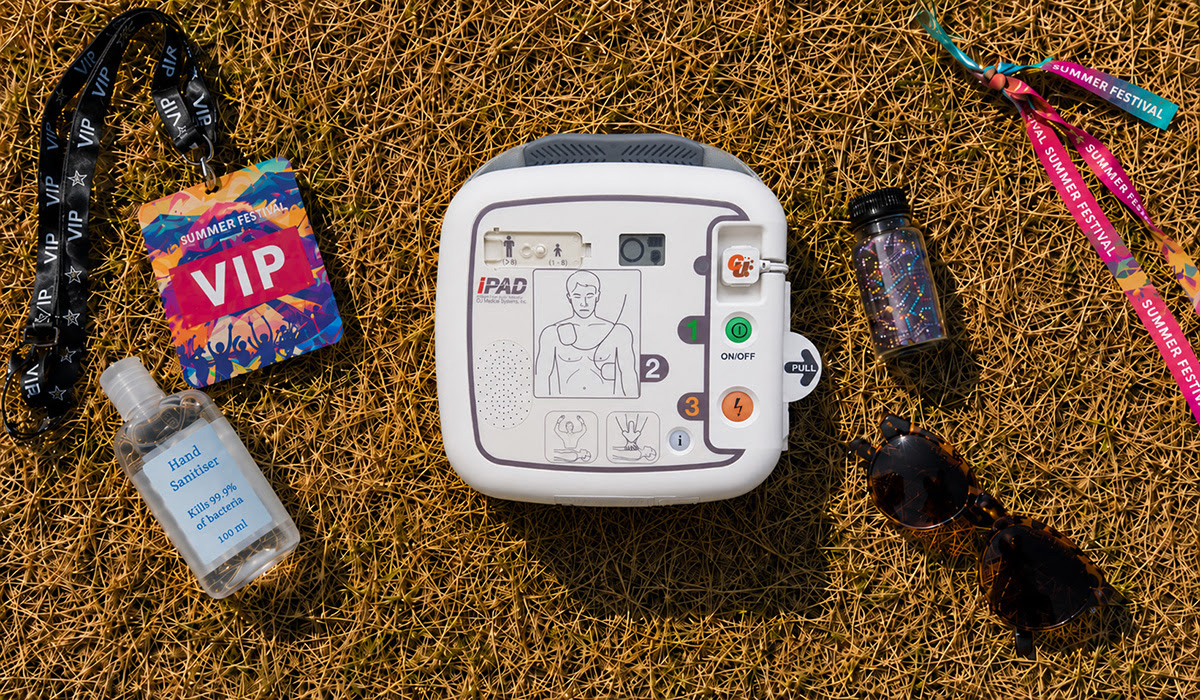
Above: iPAD NFK200 Defibrillator
What to Do During a Cardiac Arrest
- Check for a response and normal breathing. Carry out a quick primary survey. Shake the person gently, open their airway, and check for normal breathing and signs of life for no more than 10 seconds.
- Call for help. If the person is unresponsive and not breathing normally, shout for help and ask someone to call 999 or 112 for an ambulance.
- Ask someone to find a defibrillator. If others are nearby, ask a helper to locate and bring an AED while you begin cardiac arrest first aid.
- If you are alone, call emergency services first. Use the hands-free speaker on your phone so you can start CPR while speaking to ambulance control.
- Start CPR immediately. Place the heel of one hand in the centre of the chest, put your other hand on top, and press down 4–6 cm at a rate of 100–120 compressions per minute.
- Continue CPR until help arrives. Keep going until emergency responders take over, the person shows signs of life, or a defibrillator becomes available.
- Use a defibrillator as soon as possible. Switch the device on and follow the voice prompts. Knowing how to use a defibrillator can significantly improve survival during cardiac arrest.
Defibrillators are designed for public use and will only deliver a shock if it is safe and necessary, meaning there is no risk of using one incorrectly.
Studies have shown that bystander use of a defibrillator, combined with immediate CPR, can more than double or even triple survival rates compared to waiting for emergency services alone.
For more information on what to do during a cardiac arrest, visit the St John Ambulance website here.
Be Ready When Every Second Counts
Our range includes defibrillators, outdoor DefibSafe cabinets, and the widely recognised Brayden CPR manikin.
Together, these tools help workplaces, schools, community spaces, and public venues feel better prepared for cardiac emergencies and ready to respond when it matters most.
For more than twenty years, we’ve worked alongside businesses, healthcare providers, and public organisations to improve access to defibrillators and high-quality CPR training equipment.
Get in touch with us today to find out more.
FAQs
How do you know if someone is in cardiac arrest?
A person in cardiac arrest will collapse, become unresponsive, and stop breathing normally. If these signs appear, begin a sudden cardiac arrest response straight away.
Can anyone use a defibrillator?
Yes. Automated External Defibrillators are designed for public use. They provide voice instructions and will only deliver a shock if it is necessary.
How quickly should a defibrillator be used?
Ideally within the first few minutes of cardiac arrest. Early defibrillation significantly improves survival rates.
Is CPR enough during cardiac arrest?
CPR helps maintain circulation, but defibrillation is often needed to restore a normal heart rhythm. Using both CPR and a defibrillator provides the best chance of survival.
Further Reading
- What to Look for in an AED
- The Importance of Integrated Basic Life Support
- Exploring the Circuit: The UK’s National Defibrillator Network
- Overcoming Fears of Using AEDs in the Public Domain