



Defibrillator Readiness Assessment
for Local Authorities & Councils
Could your local residents find and access a public defibrillator in an emergency?
Out-of-hospital cardiac arrests claim around 30,000 lives a year in the UK. For councils and local authorities, making defibrillators visible, accessible, registered, and ready to use can make a critical difference in the moments before emergency services arrive.
Take our free defibrillator readiness assessment to review your local authority’s AED (Automated External Defibrillator) provision and identify where access, visibility, registration, or maintenance could be improved.
Your action now could help save someone’s life in the future.
Take the 30-Second AED Visibility Check
Please complete the questionnaire below. A member of our team will contact you to discuss your results and provide a more in-depth defibrillator checklist, and you will be entered into the draw for a free defibrillator!*
(All results are strictly confidential and will not be shared publicly.)
What Your Defibrillator Readiness Assessment Uncovers
Our free defibrillator readiness assessment is custom-built for local authorities and takes 30 seconds to complete.
The results will highlight your current position and provide recommendations for improvement. See how that benefits you below:
Number of Defibrillators
There is no strict legal ratio of defibrillators to the number of people, but guidance focuses on accessibility within a specific time frame rather than just population count. The generally accepted standard for maximum effectiveness is having a defibrillator accessible within 2 to 3 minutes (walking time). Ideally, a defibrillator should be within 200 metres of where it is needed. [1, 2, 3]
Public Access Defibrillator Visibility
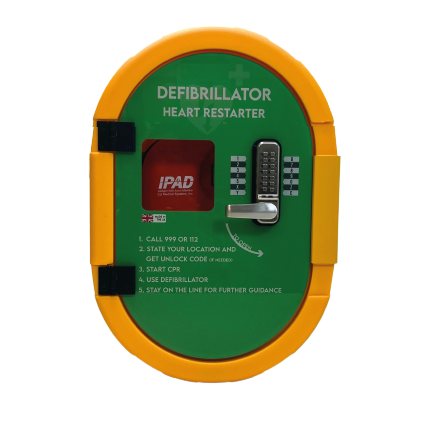
A defibrillator is only useful if someone can find it in time. Poor signage and low-visibility cabinets mean that even well-placed AEDs go unused in an emergency. We’ll review what’s in place so the public can locate a device quickly when it matters most.
Emergency Service Visibility
If your public access defibrillators aren’t registered on The Circuit, a 999 call handler can’t direct a bystander to them. For councils managing multiple public sites, this is one of the most common and most preventable gaps in provision.


Defibrillator Coverage
It’s easy to assume your network is spread evenly across your area. Often it isn’t. Mapping your current defibrillators against population size and geography frequently reveals blind spots that leave whole communities without access.
Defibrillator Readiness
Expired pads, flat batteries, and damaged cabinets can render an AED useless during a cardiac arrest. Robust guardianship, regular inspection records, and a clear process for replacing consumables are what create real readiness.
High-Risk Locations
Not all public spaces carry the same risk. Town centres, leisure facilities, and transport hubs see higher footfall and higher cardiac arrest incidence. Knowing where your priority sites are is the first step to making sure they’re covered.
Maintenance and Documentation
Community expectations around AED provision are growing. Without a documented picture of your network, it’s difficult to demonstrate duty of care to residents, insurers, or scrutiny communities. The assessment gives you a clear shareable checklist to work from.