

Most schools in England now have a defibrillator on site. A Department for Education programme delivered over 20,000 devices to close to 18,000 schools by 2023; that part of the job is largely done.
The harder part is what happens once the gates close for the day.
A defibrillator sitting in a locked corridor or a staffroom cupboard is only any good to the people who can get to it, and for large stretches of the day and year, that’s very few people. Getting this right is really a question of location: the best defibrillator cabinet for schools is one that people outside the building can actually reach.
What the Research Shows
A 2022 study of cardiac arrests in the West Midlands, led by researchers at the University of Warwick, mapped where out-of-hospital cardiac arrests happened in relation to local schools. Nearly seven in ten (69.3%) occurred within 500 metres of a school, about a five-minute walk.
Over half the schools surveyed had a defibrillator on site, but only 13% of those devices were accessible around the clock.
The study’s own conclusion was blunt: cardiac arrests inside schools themselves are rare, but registering AEDs with the local ambulance service and opening them up to the surrounding community would make them far more useful.
Department for Education guidance leans on the same research, pointing out that a school defibrillator’s benefit to the wider community can increase by up to 100-fold once it’s somewhere the public can reach, rather than kept for use during lesson time.
Supply was step one for AED requirements for schools. Access is step two, and it’s the step still getting overlooked.
Why Are School Defibrillators Inaccessible?
Storing a defib near reception or the staff room is easy to find during the school day and easy to keep an eye on, but schools are closed for roughly 13 weeks a year.
A defibrillator that only works during school hours is out of reach for a real chunk of the calendar, which means that a bystander in need outside of school hours gets no benefit or protection from the device.
Moving the Defibrillator Outside
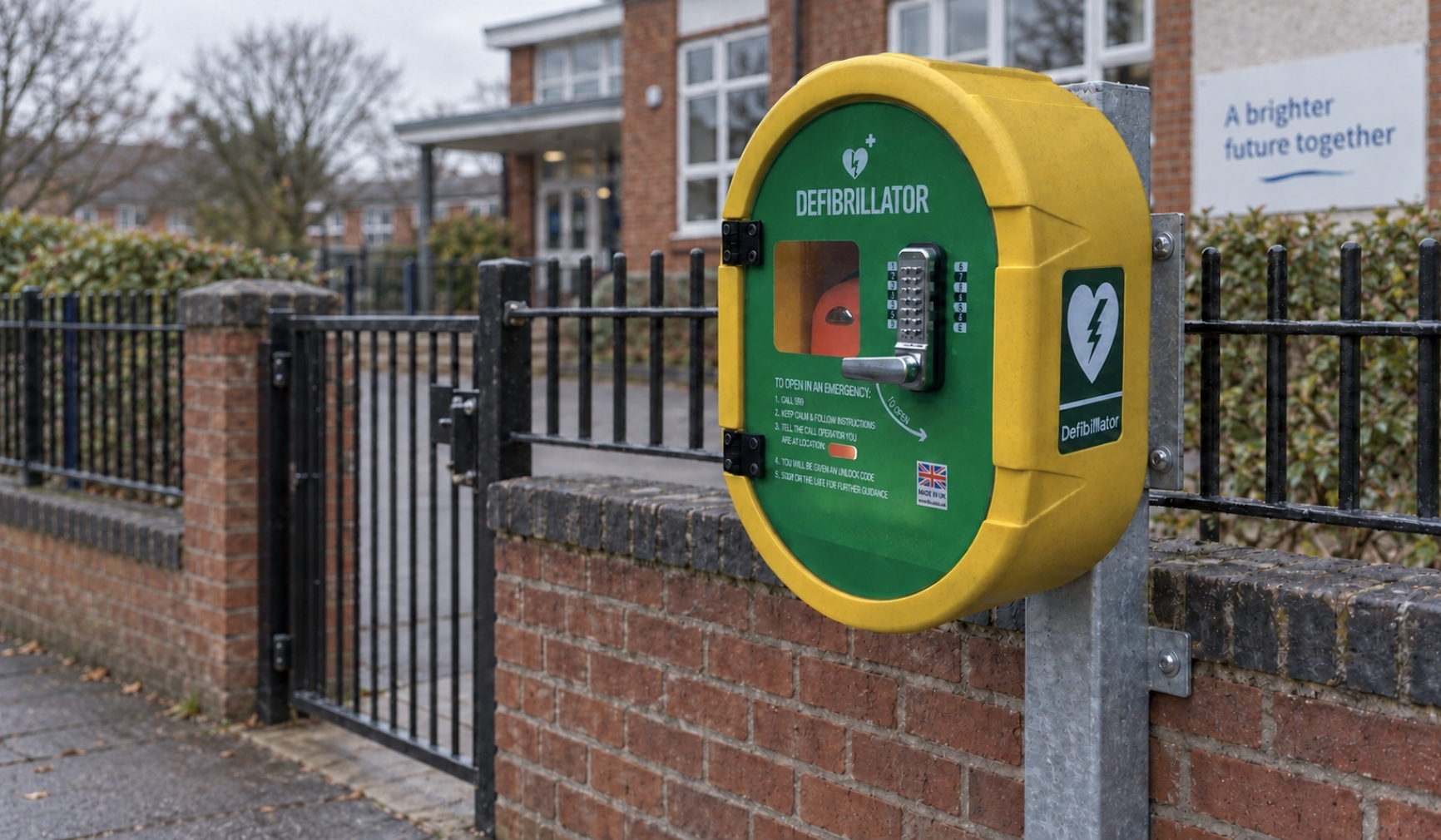
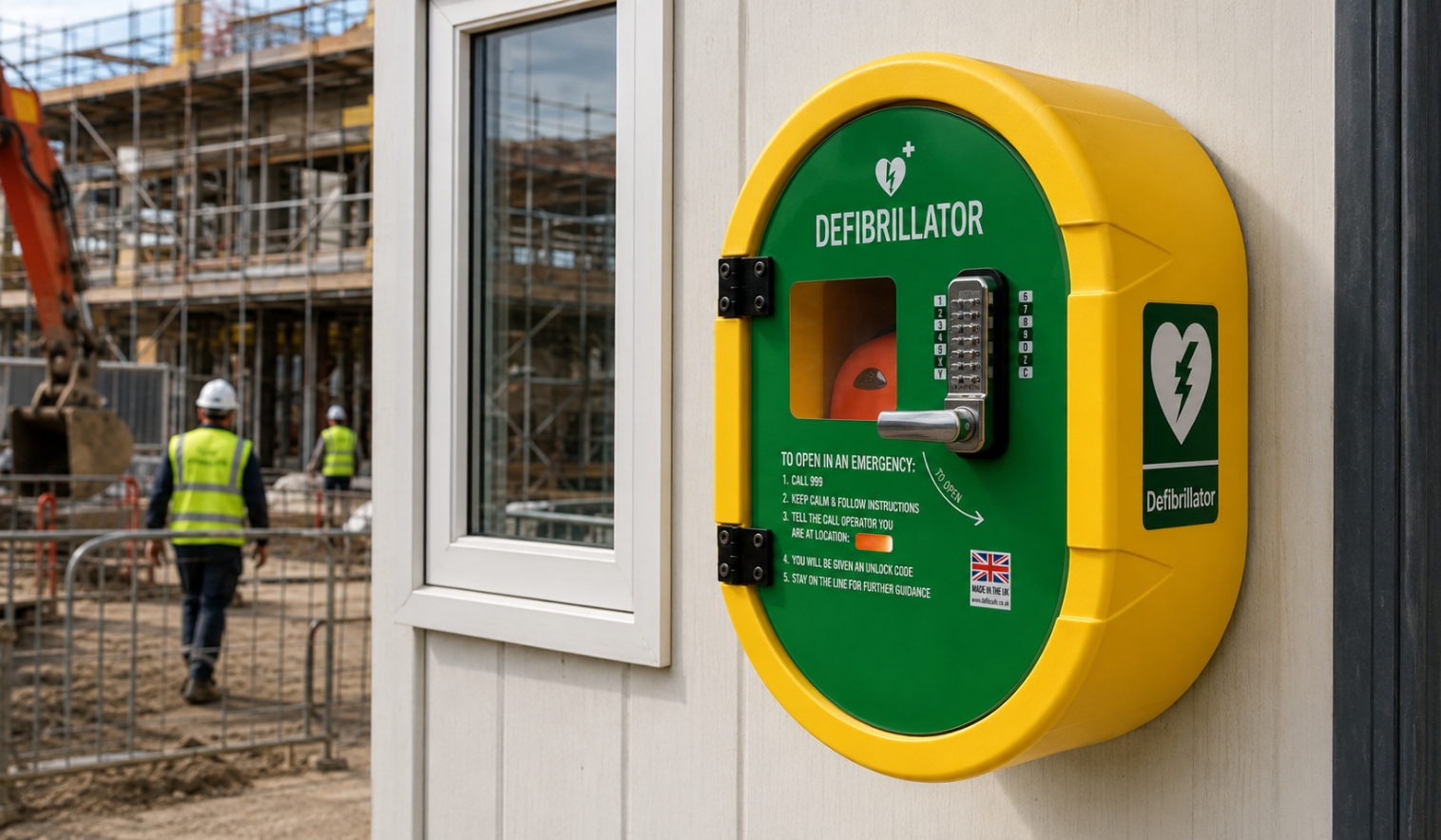
The solution doesn’t necessarily mean buying another defibrillator. In many cases, it can be achieved simply by relocating the existing device to a defibrillator cabinet for schools mounted on the outside of a boundary fence or an exterior wall, which greatly improves access and, by extension, cardiac protection.
Department for Education guidance backs this directly. It suggests that schools wanting community access should site at least one device somewhere that works for staff, pupils and passers-by alike.
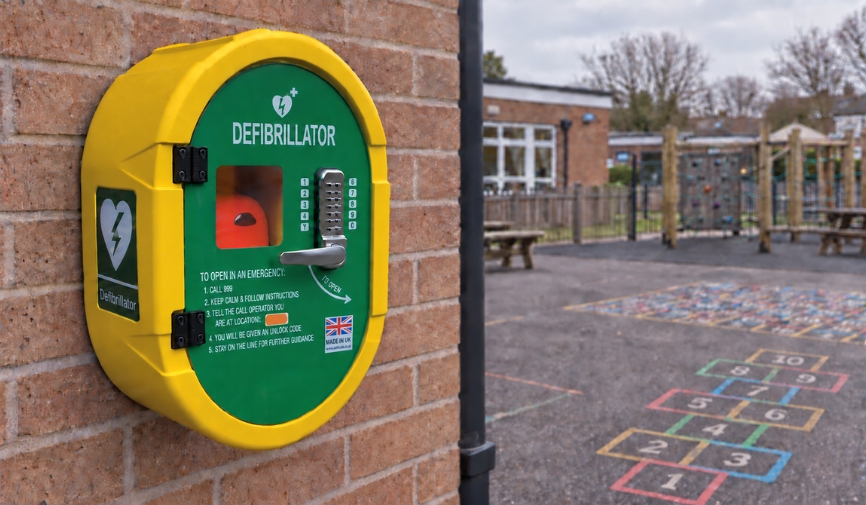
In practice that often means playground AED storage near the sports hall or playing fields, spaces that local clubs and community groups keep using outside usual school times.
Outdoor cabinets have to earn their keep against the weather: rain, frost, direct sun, and general wear and tear.
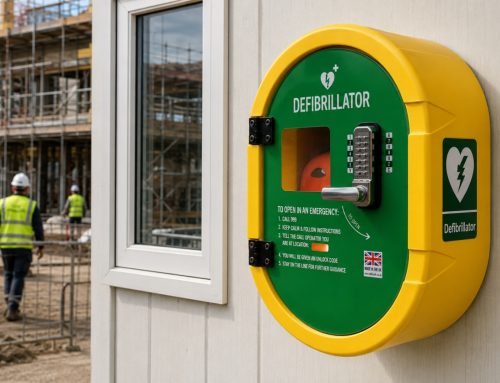
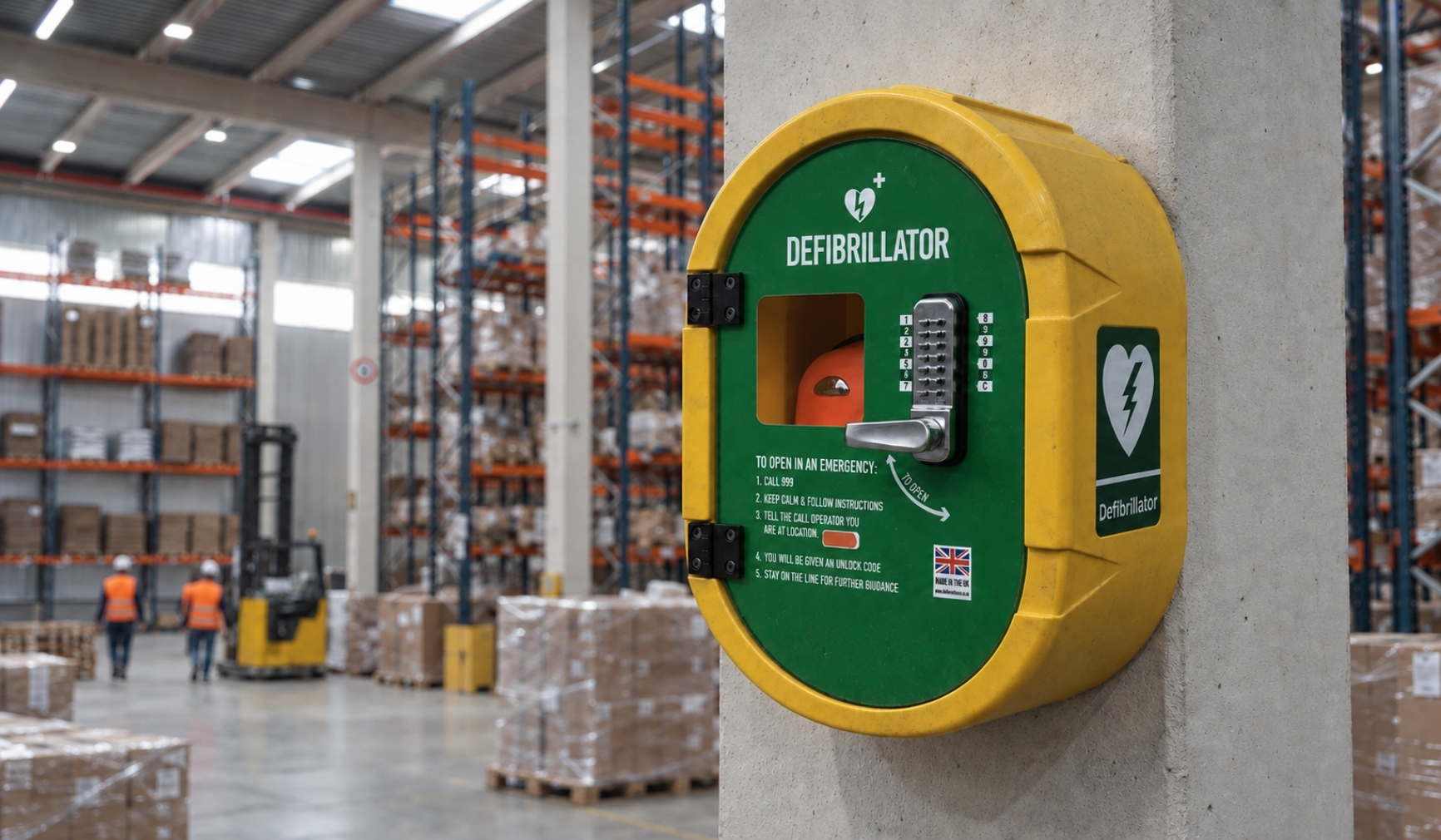
Government guidance sets a minimum IP65 rating for outdoor defibrillator cabinets, and a cabinet with a built-in heating element is worth a little extra cost, because keeping the device within its rated operating temperature matters far more outside than it does in a heated building.
WEL Medical’s DefibSafe range was designed with exactly this kind of playground AED storage in mind.
Locks, Codes and Safeguarding
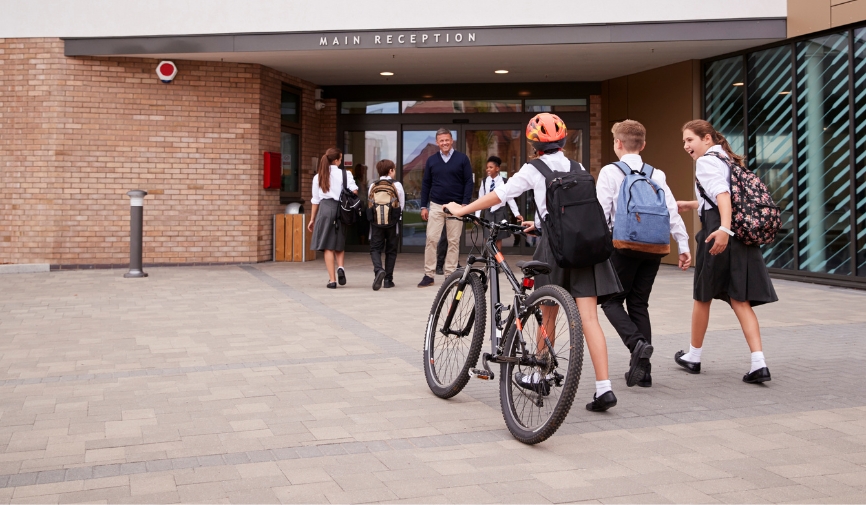
An external cabinet raises an obvious question for any school: how do you stop it becoming a curiosity for pupils without making it useless to a stranger in a genuine emergency?
Many schools answer this with a coded lock rather than an open cabinet, which puts them slightly out of step with the wider public-access network; Resuscitation Council UK’s general preference is for cabinets to stay unlocked altogether.
For a school, a code is usually the more workable compromise, provided it’s registered with The Circuit so an ambulance call handler can pass it straight to a caller and provided it isn’t changed often.
Department for Education guidance is specific on this point: handing out an outdated code mid-emergency causes exactly the delay a cabinet is meant to prevent, so it recommends sticking with a code staff already know.
Registering on The Circuit matters whether the cabinet is locked or open.
It’s the national network linking public-access devices to the 999 system, and a defibrillator that isn’t on it won’t come up when a call handler searches for the nearest device.
Where School First Aid Compliance Fits
It’s important to note that there’s no law requiring a school to have a defibrillator and no compliance certificate to earn.
What does exist is non-statutory Department for Education guidance, setting out soft AED requirements for schools around purchasing, siting and maintenance. There’s also a recommendation to choose devices with voice prompts so an untrained member of staff can act with confidence.
A good mindset is to treat this as good practice rather than school first aid compliance in any formal or legal sense.
Need a Robust Defibrillator Cabinet for your School?
A cabinet built for an office corridor won’t last long screwed to a fence through a British winter.
WEL Medical’s DefibSafe 2 has riot-shield-grade doors, a thermostatically controlled heater to help protect the defibrillator against low temperatures, an IP66 rating, and yellow and green housing that’s easy to sport from across a playground.
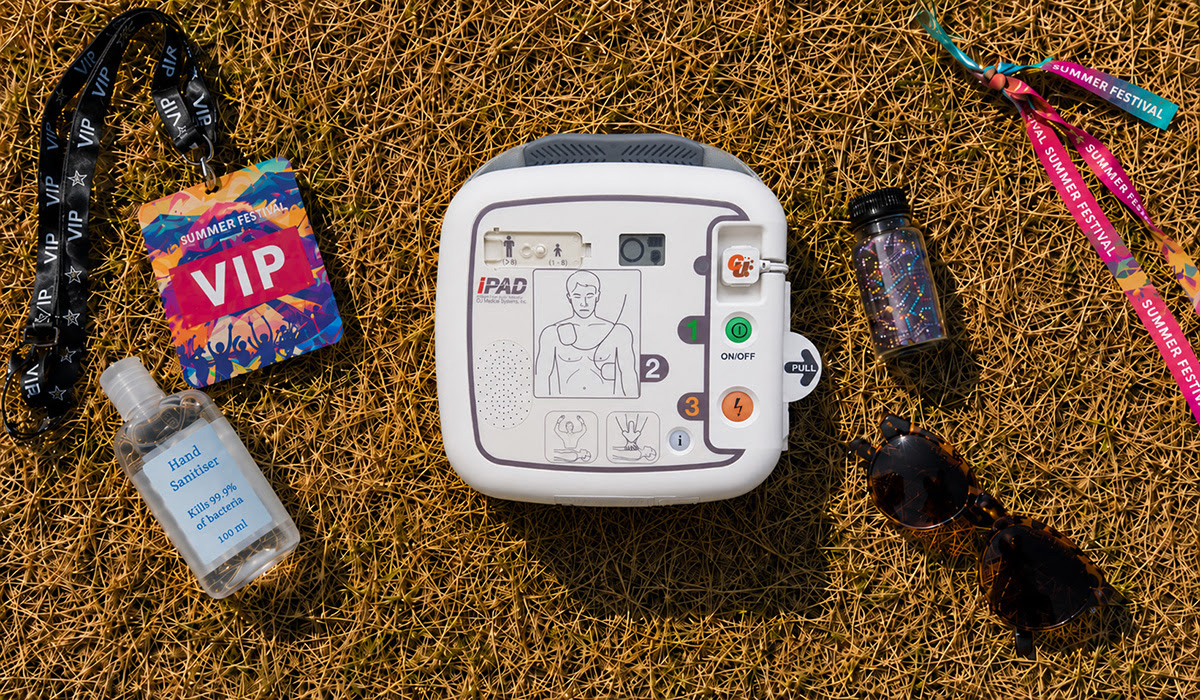
Set a PIN at installation, and it can still be shared quickly through The Circuit when it’s needed. WEL Medical also supplies the iPAD defibrillator range alongside it.
Get in touch if you’re looking to fit a defibrillator cabinet for schools that can handle both playgrounds and British weather.
FAQs
Do UK schools have to have a defibrillator cabinet?
No. Department for Education guidance strongly encourages it, and most state-funded schools in England now have one following the government’s 2023 rollout.
What IP rating does an outdoor school defibrillator cabinet need?
As part of the wider AED requirements for schools, Department for Education guidance sets a minimum IP65 rating for outdoor cabinets, protecting the device from dust and water ingress in rain, frost and general weather exposure.
Does a defibrillator cabinet count towards school first aid compliance?
Not in any formal sense, since there’s no compliance standard covering defibrillators specifically. A properly sited, weatherproof, registered cabinet supports a school’s wider first aid arrangements, but it sits alongside the school’s normal first aid needs assessment rather than replacing it.
Can the public use a school’s defibrillator?
Yes, provided it’s sited for out-of-hours access, such as on an external fence or wall near a gate, so the public can physically reach it. Registering it on The Circuit doesn’t determine whether it can be used publicly, but it does mean ambulance call handlers can direct a 999 caller straight to it. The research behind Department for Education guidance suggests this kind of accessible siting is what makes a school defibrillator genuinely useful to the wider community, not just to staff and pupils.


Leave A Comment